Category: Custom Essay writing

  • Does Respondus Record you, Sound or Screen? Is it Safe?

    Does Respondus Record you, Sound or Screen? Is it Safe?

    Respondus Record supports all major features of the popular Android mobile security apps, including the ability to record audio, read text & call logs, and take screenshots.

    But does it do sound recording too? Does it read texts and call logs as well? Is Respondus Record also safe? This article answers these questions.

    Does Respondus Record You?

    Respondus records you. It uses your IP address to ensure that we can connect to the servers, but this information is only used for security purposes and is not logged or recorded.
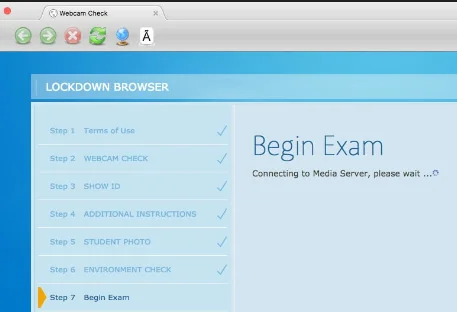
    using respondus browser

    Yes. Respondus records everything you do. This includes the websites you visit and the searches you do, as well as all your conversations with contacts and other people on the internet.

    Respondus is a free tool that allows you to record audio, video, and webcam activity online.

    You can use it to keep track of your time spent on various websites, so you can focus on what matters most. And unlike other programs, it doesn’t collect your data.

    The program does not record your keystrokes or passwords. It does not record anything else except the audio from your microphone and webcam feed. This means that even if someone else could access your system using these tools, they would only see what you see and hear.

    Respondus does not require any additional software to run. It works alongside your existing operating system and doesn’t require further configuration or setup.        

    How Does Respondus Browser Work to Detect Cheating

    The Respondus browser is a powerful tool that can help detect cheating. The software works by monitoring your online activity and reporting any suspicious activities to the game or website where they occur.

    The software has been designed to work alongside other anti-cheat software so that you do not need to download separate programs. This means that you will be able to use your existing anti-cheating software and the Respondus browser at the same time.

    You can use this program to detect cheating in several different ways. One of the most obvious ways is through normal gameplay, as the browser will automatically check for any unauthorized changes on your screen and report them back to the game or website where they occurred.
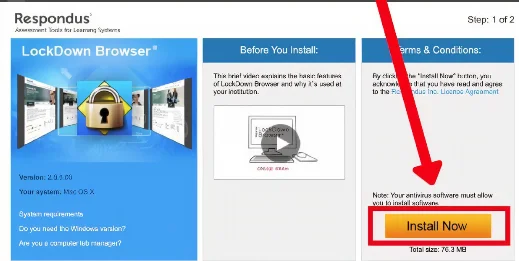
    installing respondus

    Respondus Browser works by monitoring your browser’s activity and notifying you if it sees any suspicious behavior. This happens when you enter a site not approved by the company that made this browser.

    Another way this program can be helpful is when using voice chat on a game or website such as Skype or Ventrilo, as it will monitor these channels for unauthorized changes and report them back to the server.

    This means that if someone tried to impersonate another player through voice chat, they would be instantly caught with this method!

    Is Respondus Browser Safe

    Respondus is a browser that aims to make browsing the web more secure. It keeps users’ data private by encrypting it, and it uses HTTPS to do so. The browser also has other security features that help keep users secure online.

    For example, it uses multi-factor authentication for all accounts on your device, including email and social media apps. In addition, Respondus protects users from phishing attacks using a risk algorithm. This helps ensure that you’re connecting with the right site or person.

    Respondus also uses Secure Sockets Layer (SSL) technology to help ensure secure connections between your device and the websites you visit. This ensures that data is encrypted while traveling across networks like the Internet and stored in memory on your device itself.

    Does Respondus Browser do the following;

    1. Record Your Video

    Yes, the Respondus browser records your video. It is possible to capture a video using the ‘record’ function in the browser. The recording mode will be disabled until you press the ‘capture’ button. This means you can use your favorite browser and record videos without issues.

    webcam check

    Respondus browser also provides an option to record a video stream at any time. This is done by simply clicking the record button and selecting the desired video stream from where you want to start recording.

    Once done with this process, you can choose the file format (MP4) and upload it to your favorite cloud storage service or email it directly to someone else.

    2. Detect New Tabs

    The Respondus Browser Detect feature is a browser extension that allows you to detect new tabs on your computer. It will then show the number of new tabs and the number of URLs in each tab.

    When you open a new tab in Respondus Browser, it will automatically detect if this is a new tab or a new window or not.

    If you have multiple windows open and open a new one, Respondus Browser will only detect the first window and show it in the main window. If you have more than one window open, the other windows are hidden from view.

    The Respondus Browser Detect extension does not detect new tabs by itself. You can use it to indicate how many open tabs, but it does not tell you what sites they belong to.

    3. Monitor Your IP Address

    Yes, Respondus Browser monitors your IP address. This is done to detect suspicious activity on your computers, such as viruses or malware.
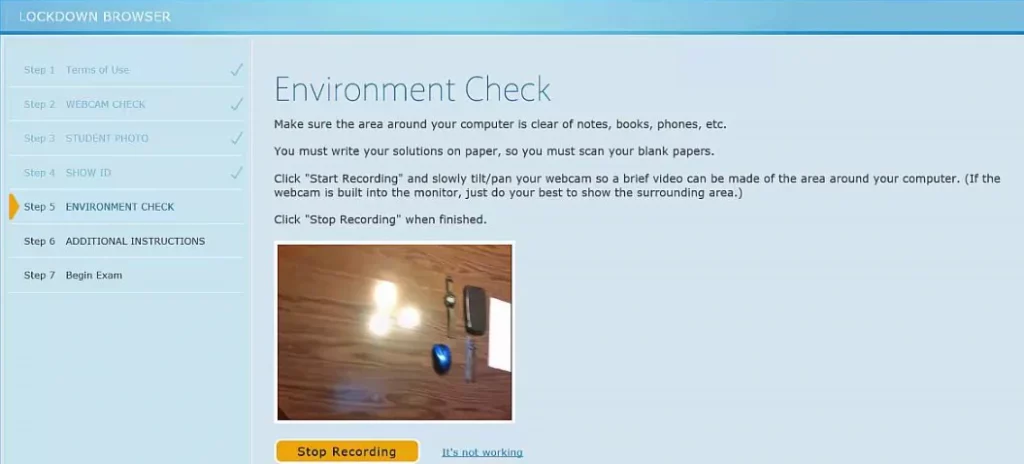
    environment check

    It also monitors your traffic, including information about the websites you visit, and sends us to help us protect our users from spam. You are always free to turn off this feature if you wish.

    The other information sent to Respondus is what you type into the browser.

    The collected data includes your IP address, browser version and operating system, web page visited and pages viewed, search terms entered, and website visited via HTTPS or HTTP.

    4. Track Your Eyes

    The Respondus browser is a different kind of Internet browser. It takes a different approach to track you online and has different privacy options.

    Respondus doesn’t track your eyes across the web, but it does track your mouse movements. When you move your mouse over an image or link, Respondus will note that movement so that it can recognize what part of the image you’re looking at.

    You can then use this information to see which parts of an image are highlighted in other images on the same website.

    Because this feature is built into the browser itself, it’s not possible to disable it. If you don’t want to use this feature, there’s nothing you can do about it — but if you want more control over how that information is used, there are some options available.

    Does Respondus Browser Break Your Computer

    Respondus Browser is a lightweight and fast web browser that has many features. Respondus Browser is a security tool that helps protect your computer from malware and viruses. It is a powerful anti-malware tool that will help you detect and remove any malware or virus that may be present on your computer.

    Respondus browser can be used as an anti-malware or antivirus program for Windows, but it is also known to have some other features like internet privacy protection and a web application firewall. This program has been designed to detect and remove all types of malware, including rootkits, Trojans, worms, spyware, and adware.

    If you are using Internet Explorer or Firefox, ensure they are updated and up-to-date with their latest versions before installing this program.

    If you already have installed it and have been using it for a while, then there are likely some issues with your computer that have already occurred by installing this program in the first place. You should check with your antivirus software before proceeding any further.


  • Single Spaced Essay in Word: What it is, Meaning and Format

    Single Spaced Essay in Word: What it is, Meaning and Format

    As a student, you have often been instructed by your teacher or professor to come up with an essay with specific spacing between its lines. While some instructors will require their students to write their essays using double space between the lines, others will require students to submit single-spaced essays.

    In this article, we are going to explore what single-spaced essays are, how to write them, their characteristics, and when to use single-spaces in an essay.

    What is a single-spaced Essay?

    For those of you who are not familiar with what a single-spaced essay is, think of it as the spaces between the lines in a typed paper.

    example of single spacing

    Basically, most document-generating software, such as Microsoft Word, offers writers various line spacing options.

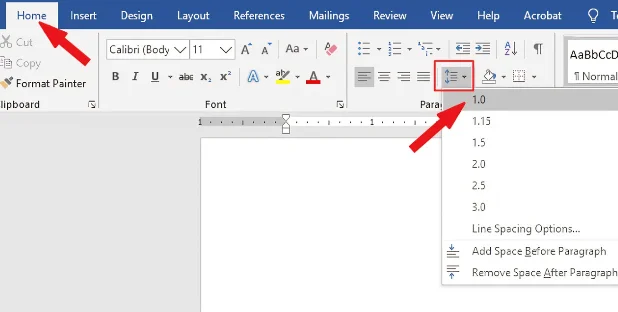
    Such options range from 1.0, 1.15, 1.5, 2, 2.5, and 3. 1.0 line spacing represents the smallest space between lines which is what we are terming as single-spaced.

    When you utilize the smallest space between lines in your essay, which is 1.0, your essay will be referred to as a single-spaced essay. To help you understand the differences, if you select any line spacing that is above 1.0, your essay will appear to be more spacious because there will be more room between lines.

    When you select 3 as your line spacing, your essay will have the maximum spaces between its lines. 

    How can you tell that an essay is single-spaced? Well, as aforementioned, a single-spaced essay will have lines that are very close to each other. What this means is that more lines will be compressed within a page hence more content.

    Therefore, if a 1-page single-spaced paper is changed into a double-spaced paper, it will turn into two pages. The more you add the line spacing, the more pages there will be, and vice versa. 

    How to Write a Single-spaced Essay

    Writing a single-spaced essay takes the same procedure as other essays. The only difference is that the line spacing will be at the minimum of 1.0.

    To be more specific, when you are writing a single-spaced essay, you must first be sure of the type of font you will be using throughout the essay. This is because some fonts are larger than others and may make the essay appear larger.

    In most academic assignments, students may use Times New Roman or Calibri Light depending on the instructions from their professor. Once you have selected the appropriate font, you will also select the size of the font.

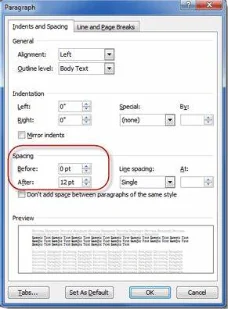
    paragraph spacing

    Document-generating software gives you a large selection of font sizes to choose from. Mostly, academic essays will require 12 font, which is the commonly used font size in academic works. 

    Once this is done, you will select the line spacing. As aforementioned, you will be given options from 1.0, 1.15, 1.5, 2, 2.5, and 3. 1.0 line spacing where 1.0 represents the least space between lines or the absence of space between lines.

    All this information is found at the top ribbon of your document-generating software on your computer. Once you have selected 1.0, your entire document will be single-spaced.

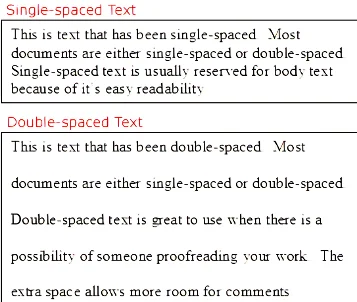
    As you have now understood, the only difference between a double-spaced essay and a single-spaced essay is only the line spacing. Just like their names suggest, a single-spaced essay has half the space of a double-spaced essay between its lines. 

    How to Single-space an Essay

    The procedure of doing this entirely depends on the document-generating software you are using and the device. In most cases, students will use their computers or laptops to type their essays, and those computers run on Windows or Mac OS from Apple Company.

    The most commonly used document-generating program/software in the two operating systems (OS) is Microsoft Word. This is the reason we shall explore the process of single-spacing an essay in Microsoft Word. 

    If you want to single-space your paper or the entire document, go to the top part of Microsoft Word in the Design tab and select paragraph spacing. This is where you will select no paragraph spacing.

    This will automatically override the settings that you had earlier imputed. The same case applies to Mac OS. 

    As you can see, it is very simple to transform your essay into a single-spaced essay. Now that you have understood what a single-spaced essay is and how to create it on both Microsoft and Mac operating systems, it is time to explore the time when you are required to utilize either the single line spacing or both in an essay. 

    Instances when you Need to use a Single Space in an Essay

    The most important instance in which you are required to use a single space within your essay is when your instructor or professor states that you should.

    When the instructor gives you an essay assignment, they will give you specific instructions that you are required to adhere to. In addition to this, they will specify a particular font, size, and line spacing to be used.

    spacing options

    Therefore, if your instructor wants you to write a single-spaced essay, then you must do it. 

    The second instance is when you are quoting directly from another source. This occurs when you have copied and pasted more than 4 lines of text from the source.

    For example, when you are writing a double-spaced essay, and you need to copy-paste a large portion of a quote from the source, you will need to transform the quoted text into a single space instead of a double space.

    This helps the reader to instantly differentiate your text (what you have written) from an outside quote. Additionally, it helps reduce the space consumed by copy-pasted text. 

    Another instance is when writing official documents such as letters and memos. When writing such documents, you are required to format your writing into a single space. This acts like a general rule to separate the writings meant for official purposes from academic work.

    However, even though letters and memos are single-spaced, they have a large line spacing between paragraphs to ensure that the reader easily separates the paragraphs’ contents. 

    Times when Using both Single and Double Spaces are Necessary

    In most cases, especially when it comes to essays written within academic settings, students are not expected to use both single and double-line spacing. This is because it makes the essay appear unprofessional.

    single and double spacing

    In addition to this, the reader will assume that the writer/student does not know how to use their document-generating software because they have mixed two different line spacing options.

    Therefore, students are supposed to use either single or double spaces only when necessary or when their instructor has allowed them to do so.

    As noted, both single and double spaces can be used in an essay that contains long quotations from outside sources.

    However, this only applies to essays that have been written using line spacing above 1.0 so that the difference can be visible. Long quotes should be single-spaced within a double-spaced essay. 

    There are other instances where both double space and single spaces are used. However, those instances are within journalism and other forms of creative writing.

    Journalists can use both in their long reports to emphasize such texts or indicate differences. The same case applies in creative writing, where bloggers and other creative writers can use both double space and single space to enhance the visual appeal of their content. 

    If you, as a student, read and understand the contents of this article, you will never face any confusion when it comes to creating single-spaced documents. In addition, you will know the difference between single-spaced essays and double-spaced essays. 

  • Is a Thesis the same as a Claim: How to Write Each

    Is a Thesis the same as a Claim: How to Write Each

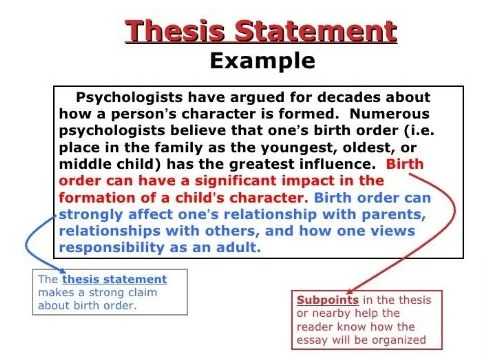
    A thesis is a statement that carries the main idea of an essay, paper, or piece of writing to help the writer control the ideas within the paper. It reflects the main argument or point of the writer on a particular topic.

    A claim is the beginning or end of an argument that needs to be supported with proper evidence and reasoning. This is because the audience to whom the claim is relayed can challenge it, and therefore, the argument made by the claim must stand.

    Is a Thesis the same as a Claim?

    Thesis statements are not necessarily claims, but they can be used as claims. For example, a thesis is the main argument in writing, while claims are the points that can be accrued from that statement.

    claim vs thesis statement

    Therefore, the thesis must be in the introductory part of ant piece of writing. Everything that you include in that writing must reflect back to the thesis statement. Backing the argument is what brings up a claim.

    Therefore, claims are topic sentences that include the argument that backs the thesis.

    They are a sneak peek of what you will include in your essay paragraphs and must be supported by factual information to bring out relevance.

    However, a thesis statement can be a claim in argumentative papers. When you are arguing against something, you make a claim that you are supposed to back in the rest of the writing.

    The statement is a claim because it should demonstrate the value, policy, facts, and examples that are recent, accurate, and reliable. Therefore, one can refer to a thesis statement as a main claim that sets up the way for other minor claims that support it.

    These claims help build a well-rounded argument in the essay by showing that you have considered many possible positions to support your topic.

    How to write a Thesis Statement

    A thesis statement must be included in essays to provide the reader with a guide of your arguments and opinions in the essay and help you organize and develop your arguments.

    a thesis statement

    A good thesis statement must be coherent, concise, and contentious. It should appear as the last part of the introduction of an essay or research paper.

    There are four steps that one should follow when writing a thesis statement:

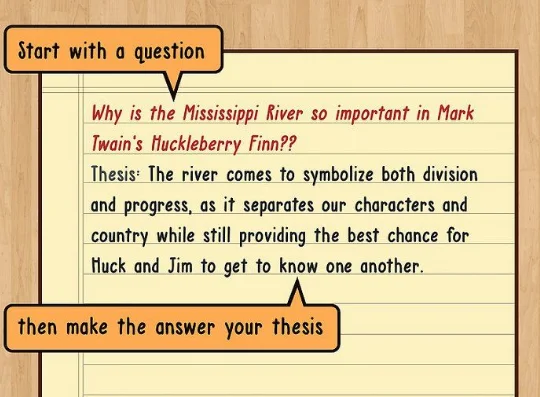
    1. Start with a Question

    To write a thesis statement, you need to come up with a question about what you want to find out about the topic you are writing about.

    This question is like the initial thesis, which can be referred to as a working thesis because you are in the early stages of the writing process. The question should be based on what you want to say about the topic.

    2. Write the Answer to the Question

    After identifying the main question that should be asked about the topic, answer the question in detail. The answer to this question is what provides the root that your essay or research paper will follow.

    Make the answer simple to ensure that you do not complicate your views. For example, if the question was on what are the effects of the internet on education, you can come up with an answer such as the internet has more negative effects on education today compared to its positive impacts.

    3. Develop the Answer

    After getting the answer, it is now time to consider why it effectively answers your essay question and how it will help you convince the reader that the arguments you will make in the essay are valid.

    To do this, you need to research more so that when you begin to write, the answer will be provided and focused on extensively.

    The answer you come up with should also effectively portray the position you have taken in the essay and sketch out the arguments that you will use to support it throughout the essay.

    4. Refine the Thesis Statement

    This is all about making sure that your thesis statement is strong enough.

    Therefore, you must ensure that it tells the readers why you hold the position you have taken about the essay topic, what they will learn after going through your writing, and the key points of your argument or narrative that will be focused on in the essay.

    A good thesis statement is not all about stating your position on the essay topic but also summarizing your overall argument on that particular topic. Considering this moves your thesis from weak to strong.

    5. Make it Specific

    The thesis statement should be straight to the point. Anything that will not be discussed in the essay should not be involved, and only specific evidence should be used to support it.

    The language should also be specific. This means that the thesis statement should not report a statistic or a fact but make an assertion.

    How to Write Claims

    writing claim

    Claim statements in an essay or research paper must be arguable but should be stated as facts. This means that they should be debatable but at the same time show inquiry and evidence.

    A claim cannot be a personal feeling or opinion about something. It must be something that is supportable using factual arguments. Therefore, a claim must be specific to assert a focused argument.

    Also, claims define the goals, scope, and direction that your paragraphs will take. To write a good claim statement, you should:

    Come up with a Strong Argument

    A claim must be an argument that is in favor or against the topic of study. This argument should be supported by sufficient evidence to convince the reader that it is valid.

    The Claim Should be Stated as a Fact

    The claim must look as a fact to the reader. For example, the sentence ‘incarceration of juvenile delinquents is illegal’ is not a claim.

    Instead, incarceration of juvenile delinquents is no longer an appropriate punishment in America’ is a factual claim.

    The Claim Should be Straight to the Point

    When a claim is direct, it shows you all the aspects that you will need to tackle. If it involves a lot of information, you are likely to make a vague argument that may not make sense or convince the reader.

  • Writing a 2000-Word Essay and How Long It Is: Essay Examples

    Writing a 2000-Word Essay and How Long It Is: Essay Examples

    Everybody knows that writing an essay is a great way to improve your English. But have you ever wondered how long an essay should be? What is the best length for writing a 2000-word paper?

    And how can one break down my essay into 1500 words, 1250 words, and so on? Read on to find out these answers.

    What is a 2000-word Essay?

    writing essay

    A 2000-word essay is a term used to describe an essay that is 2000 words long. While the length of an essay may vary, it is generally agreed that a 2000-word essay is too long for most students (and teachers) to read in its entirety.

    A 2000-word essay is often referred to as a “full-length” essay. This means that the paper should have at least 2,000 actual words.

    While this does not necessarily mean that you will be graded on length since many other factors go into grading, it is important to use this benchmark as a guide when writing an essay.

     Structure of a 2000-word Essay

    The structure of a 2000-word essay is simple. It consists of three parts:

    • Introduction: The introduction should be a brief overview of your topic. You can use it to ensure that the reader understands exactly what you will discuss in the rest of the paper. It is also good to put your point across at the beginning so that it will be remembered when you get to the end.
    • Body paragraphs: Each body paragraph will have at least one idea and one or more supporting ideas. These ideas should connect in paragraphs, which should not be too long because it will be difficult for the reader to follow your argument.
    • Conclusion: Your conclusion should sum up all that has been said in your paper and give its main points clearly and briefly so that the reader can understand them easily after reading everything above it.

     How to Write a 2000-word Essay

     The 2000-word essay is the most common length for college essays. It’s a manageable size that allows students time to develop their ideas, establish the connections between them, and ensure they have included everything they need.

    research sources

    Here are some tips that can help you get started:

    Research your topic thoroughly. Make sure you have done enough research on your topic before writing your essay so that you can write clearly and concisely.

    You don’t want to waste time on research only to realize that you don’t have enough information to write an effective essay.

    Also, choose a topic that interests you, not what will impress your professor or teacher. While it’s important for teachers to see how much thought students put into their papers, it’s more important for students to show their creativity and individuality in writing their papers.

    Another step is to start writing the first draft. Start with an introduction and use this as a basis for all other parts of your paper (including topic sentences). You can write as many drafts as needed until you feel confident about what you will say and how you will say it.

    Finally, another step is editing and proofreading your work before the submission deadline. This will ensure that there are no spelling mistakes, grammatical errors, or vague ideas left behind by any of these steps.

    How long is a 2000-page Essay?

    an essay page

     How long in terms of:

    Pages

    A 2000-word essay is usually about 20 pages in length.

    Paragraphs

    The 2000-word essay will be around 150 to 200 paragraphs long.

    If you’re writing a term paper, check with your professor about how many pages of your final paper are needed for your specific assignment.

    Sentences

     A 2000-word essay requires approximately 200 sentences.

     Examples of 2000-word Essay Topics

    The following are some 2000-word essay topics that you can use as inspiration.

    1.  The Impact of Technology on Society

    2.   The Importance of Education in Modern Society

    3.   The Future of Marriage and Family Life

    4.    How People Can Help the Environment

    5.    What is the Best Way to Live?

    6.    How Much Should You Learn In College?

    7.    Is Religion Important in Today’s World?

    Example 2000-Word Essay Template and Outline

    1. Introduction: Aims, background, and approach to the topic.

    2. Background: Briefly describe the topic in terms of its history, cultural significance, and key players/issues. Describe your research findings.

    3. Approach: How did you gather your information for this report? What sources did you use? Give details of how you compiled your material into a coherent whole.

    4. Methodology: Discuss how you gathered data for this report – how did you interview people? Take note of specific sources used in each section (or where appropriate). 

    Use a bullet point or numbered list format for each section heading, explaining any abbreviations or acronyms (where applicable).

    Indicate at least one method used to prove your point (i.e., primary data collection methods, etc.). Summarise any other important research methods used on the topic (if applicable).

    5. Findings: State the main findings of your research; include relevant quotes from interviews or observations made during fieldwork and/or analysis, if applicable (a minimum

    Frequently Asked Questions

    Are 2000 words considered an essay?

    The short answer is that 2000 words are considered an essay. The long answer is that there are some exceptions to this rule.

    For example, if you’re writing a technical report about a topic in your field, it might be okay for you to submit less than 2000 words. If you’re submitting a paper to an academic journal or publication, it’s probably more acceptable for you to write less than 2000 words.

    How long is a 2000-word paragraph?

    The length of a 2000-word paragraph depends on the length of the article. If you want to write an article of a specific length, you need to know how many words are needed to make one sentence.

    For example, if you want to write an article under 1000 words, you need to divide your text into 400 or 500 sentences so that each sentence will have exactly 500 characters or words.

  • Do University Professors Check Citations and Sources in Essays

    Do University Professors Check Citations and Sources in Essays

    When students submit their research papers for marking and grading, college professors have to verify the sources cited in the paper. They check if the source cited is accurate and if the rest of the paper has been properly referenced.

    Fast-checking all the citations and references in an assignment gives your professor a chance to establish their credibility. 

    The Importance of Citations and Sources in Essay Writing

    1. Your Readers can Authenticate your Writing

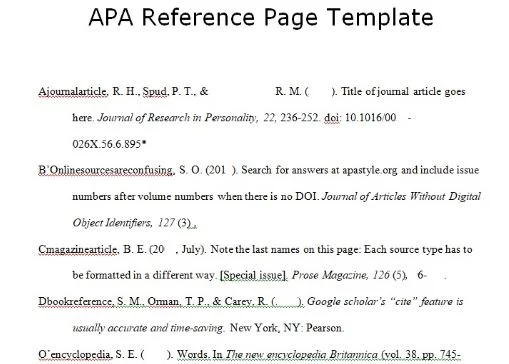
    reference page template

    When you cite your essay appropriately, it helps the audience to effectively assess the authority of your writing. Essays that have accurate citations with all sources indicated will enable readers to make a comparison of the cited work and those of the text at hand.

    Rightly so, your readers will be in a position to evaluate the legitimacy of all the arguments and claims that you make in the essay. 

    A person reading a well-cited essay can be able to verify its genuine integrity. It makes it easy for readers to fast-check all the cited sources and have an assurance of the text’s conformity.

    The audience reading an essay that has proper citation can easily perform their research on the theme of the text that they are reading. As a result, they can be able to get insights into all the ideas that you did not capture in the text.

    2. Citing Essays Showcases your Writing Dexterity

    Without a doubt, proper citation and the inclusion of top-notch references in an essay are the ingredients of a well-researched essay. Any academic document that has these features will be rated high by your professor.

    Citations provide outstanding research information to the piece of writing you are going to present to your teacher. 

    As an author, citation with the use of quality references in your essay is a sure sign of quality research literature. It is a good way of earning the respect of your readers and also your fellow authors.

    Studying and embossing your bibliography with good references is one of the ways of showing that you are a quality writer. 

    3. Citation and Sources are a Fact-Checking Mechanism

    In essay writing, accuracy is one of the most important factors. Essays that are scientific-based need to have a proper citation for showing readers the exactness of the information.

    When the audience can look up a citation for verification purposes, it acts as an accuracy check. If there is any paraphrasing, the trustworthiness of the passage will be well understood by the reader. 

    4. A Citation Shows You are a Better Researcher

    Essays need in-depth research so that you can present facts to the reader. Proper citation and inclusion of sources is the hallmark of good research skills.

    research writing

    To catch the attention of your professor, have the right page numbers, accurate names of authors, and correct facts that you present in your essay.

    Above all, being detail-oriented is one of the aspects of good research.

    5. Makes it Easy For Professors to Verify Your Work

    An essay is an important piece of academic writing. Before it is approved by your teacher, it goes through thorough vetting to validate the information you have.

    Whether you are a college professor, editor, or simply a reviewer, tracking down sources in an essay will make the essay more understandable.

    How to Get the Best Sources For Your Paper

    It is not an easy task to look for credible and good sources for your paper. With the numerous articles and websites existing on the internet, the possibility of finding a credible source can be a challenge.

    research sources

    Writers and students find it difficult to determine the credibility of a source. Below are helpful tips that can help you to make a good choice of research paper sources:

    • Always go for long articles or those that are moderate. In these articles focus on quality and not quantity. Use enough research articles to get a sense of deepness and conclusive research. 
    • Before you choose a particular source for your paper, check the persuasion of the author on the topic they have covered. The ideas of the author should be convincing and influential.
    • The background of the author is equally important when you want a credible source. Dependable sources are from professional standard organizations. If it is a single author, the source needs to have an adequate backup or be founded by an organization. A background check is vital so that you confirm the information you are using is optimal.
    • Go for updated information that has not run out of time. You can only use old information when you are researching for an event that took place at a specific time. 

    Sources For Your Research Paper

    After knowing what type of sources to look for, it is time to find the right places to get these sources. These are places where you can obtain credible sources to help you come up with an academic-worthy piece of paper.

    Whether you are a student or a writer, the following are great sources for your research paper:

    Government Entities

    Government entities are good because of regulations by professionals. This makes them safe, especially if you are to use them as primary sources.

    Depending on the country you researched, many government sources have outstanding databases with great information.

    Periodicals

    Periodicals can give you a good source of information. Magazines, newspaper articles, and journals are some of the periodicals where you can get credible information.

    These periodicals provide good information for Scholarly research such as conferences and working papers. You can also get good information for writing non-academic research papers.

    a library

    Libraries

    You can access these libraries after paying or for free. After paying, a college or school password is given to enable you to access thousands of information sources.

    Academic libraries have sources that give you a bibliography that will help you identify the background of the author. 

    You can also check the author’s credentials to be sure of the source of information. ScienceDirect, Google Scholar, and Pubmed Central are some of the trustworthy academic databases.

    Professional Standard Organizations

    These are good advice-giving guides, especially for complex terminologies and other important specifications of a country.

    Most nations have listed the specific organizations that can help people access vital information.

    Newspaper Indexes

    If you are writing a research paper and you need to use past data, newspaper indexes will give you all the information you require. These indexes have names, subjects, dates, illustrations, and all the details you can find in a newspaper.

    Because this information has been organized, both readers and writers can access this information and get facts quickly. 

  • Do Professors Check Word Count: Page Limits and Penalties

    Do Professors Check Word Count: Page Limits and Penalties

    If you are writing an essay or a research paper, chances are that you have been given a certain number of words that you should write. These are word count limits.

    In other cases, the professor gives you the number of pages that you should write. That is what I saw when I was a student many years ago. But do they really check if you achieved these limits?

    Professors check the word count of academic papers in order to ascertain that the student did the assigned work and reached the required length.

    They do this to ensure all students obey a uniform requirement and they do enough research. Checking page limits by teachers also ensures that students do equal work for uniform grading.

    To achieve that standard of uniformity, professors check the count using programs such as Turnitin and Microsoft Word because they have the best word count features.                                        

    Consequences of Not Reaching the Required Word Count

    When professors give a word limit for a piece of assignment, the prescription is meant to make you cover all relevant areas exhaustively.

    counting words

    A student is supposed to write to the limit to achieve the envisioned purpose of the paper. Under-length work has the following implications:

    1. Low-Quality Work

    The prescription of word count by instructors is meant to make students cover all points and give comprehensive arguments. When you write and do not reach the given word count, it is a sign of low quality.

    There are many possibilities that you did not exhaust in all areas given. Undeniably, assignments that are significantly under-length will inflict self-penalties on the author, and low-quality work is one of them.

    2. Lose Marks

    After toiling with research and writing an essay, the last thing you want is a deduction of marks because you did not reach the given word count.

    The assignment limit is there for a purpose. Rightly so, if you submit work that is more than 10% below the limit, most schools will deduct your marks by 10%. 

    3. Lack of Seriousness

    Assignments not reaching the word count portray a student who is not serious. Professors will always get the impression that you did not make adequate efforts.

    They will make assumptions that you were in a rush, did the assignment at the last minute, or simply did not understand the topic. This type of judgment leads to lower marks in your score. 

    4. Insufficient Arguments

    Arguments are quite significant in academic writing. They help the author to give explanations for actions or beliefs and also defend them. Most explanations are made clear through arguments in an essay.

    If you are given a word count, the instructor knows the ideal limit to make your arguments. Submitting an essay with a lower word count implies there are insufficient arguments. The work is likely to have fewer reasons that are not open for scrutiny. 

    Does Word Count Matter in Assignments?

    When doing an assignment, there is a tendency to ignore the word count requirement as a way of trying to finish the work in a hurry. Call it a sort of a shortcut to homework completion. Does that matter?

    Word count matters in assignments because it gives the minimal amount of work to be done by every student for a particular assignment. It is critical in assignments as it shows the student’s or writer’s precision and succinctness skills. Sticking to the word count shows that you can obey instructions and do adequate research for your paper.

    Scholarships, college admission essays, class work, and other types of written academic assignments all have a limitation of word count.

    word count matter

    Many learning institutions have put a 10% leeway on the word count of written academic assignments.

    When writing, it is important to aim and stay within the word count limit.

    Before you submit, check to know if you have exceeded or are below the word count. 

    If the word account is above the 10% leeway, reread and do away with redundant phrases or words. Do away with unnecessary quotations, enhance active voice usage, and minimize case studies in your assignment.

    If your assignment is under length, read again and look for areas that need additional attention.

    How to Increase your Word Count Fast

    Rework the Introduction and Conclusion

    The introduction and conclusion are hot points where you can add points to increase the word count. Read over to add two or three sentences giving more details.

    The conclusion can also have a spot where an extra sentence will bring in more emphasis. An addition of a powerful last sentence in the finish makes a better way of wrapping up points.

    Expand Existing Quotes

    If you already have references or quotes in your paper, expound on them to have a better word count. The addition of quotes supports the ideas you have and flesh them out more in the paper.

    Alternatively, substitute existing quotes that are shorter and put longer ones that are relevant to the arguments. Remember to cite correctly, as your teachers check this as well.

    Give Clarity to Statements

    Clarification of essay sentences by using more follow-up statements can also help you to increase the word count. However, this addition should not make the assignment look vague.

    Similarly, make statements and sentences that are longer in several sections. After the breakup of statements, give an expansive clarification to each sentence to increase the word count. 

    Addition of examples

    give examples

    In sections or paragraphs where you have included examples, you can add more to elaborate your points. The addition of examples helps to show your deep understanding of the topic.

    In doing so, you will equally add a substantial number of words to your assignment. 

    Include Diagrams or Tables

    In academic writing, tables, illustrations, and diagrams form part of the word count. As long as they are in the main body of your work, they can help to boost your word count and give more clarity. Use these items in your essay if they add vital information.

    Do you Include Titles in the Word Count?

    All titles in academic writing assignments form part of the word count. Titles and headings within the assignment body are part of the actual text.

    Even the words that form the title of tables, figures, or boxes in your work are also part of the word count.

    Only titles for endnotes, appendices, and footnotes will not form part of the word count.

    The Best Free Word Counter Online

    1. WordCounter.net

    This is a common word counter that features a keyword analyzer and speaking calculator, among other features. It also has a clear sentence length analyzer and is easy to use.

    2. Countwordsfree.com

    This word counter is a favorite for many writers because it can accept files of any format. Apart from having a text cleaner, it is compatible with most common languages.

    It is suitable for analyzing both words and characters.

    3. WoW count

    This is another free word counter that has amazing features. It counts characters, words, paragraphs, sentences as well as keyword density. Moreover, you can also upload bulk articles at once. 

  • Can an Essay be One Paragraph? Writing short body Paragraph

    Can an Essay be One Paragraph? Writing short body Paragraph

    When it comes to essay writing services, the question “Can an essay be one paragraph?” arises in many students’ minds. It is a pitfall for most students. The process of writing is never easy. It takes time and effort.

    Do not fret anymore if you lack an idea of where to begin.  We will take a look and answer some common questions that might help ease your troubles.

    An essay can be one paragraph if that is the instruction given by your faculty or the content requires presenting just one idea. While this is a short essay, an essay can sustain an argument through one long paragraph if well written. The essential point is that it should be long enough to give your reader a good idea of what you are saying.

    Your main purpose in writing an essay is not to get readers to think about or agree with your ideas.

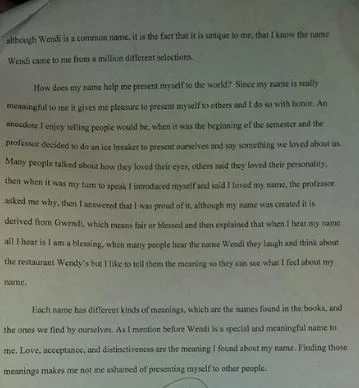
    It is to help them understand and analyze what you’ve said and why you are saying it.

    This will assist them to draw their conclusions.

    How to Write a One-Paragraph Essay

    A one-paragraph essay is not a sentence long. It consists of one topic sentence and two sentences supporting it. It is meant to be shorter than a traditional essay but longer than a short essay. It’s different from writing a 3-page essay.

    example of one paragraph essay

    The steps to writing a successful one-paragraph essay are as follows:

    Step #1 Come up with an angle

    Your thesis statement will be the angle you choose to take on your subject.

    You might choose to write about something that is happening in the news (a current event) or pull apart a specific example of how people are doing things wrong (a current controversy).

    Step #2 Determine the Audience

    You may need to ask yourself who is going to judge this essay — your professor, your teacher, your classmates, or the editor of your college newspaper. The fewer people involved in judging it, the better chance you have of getting an “A” for it.

    Step #3 Developing your Thesis Statement

    writing a thesis

    This should be the main focus of your essay’s first paragraph.

    Your thesis should be clear, concise, and well-supported by examples and evidence throughout the body paragraph.

    You will need to clearly state what you are arguing and demonstrate how it supports your claim.

    Get a strong thesis statement that clearly states what you are going to talk about in this essay.

    This will help organize your thoughts and will help you decide which facts to include and which points are worth making.

    Step #4 Write a list of Facts that Support your Thesis Statement

    You cannot include everything that supports your thesis, but you might want to make a list of five key points that support your argument and include those in your introduction paragraphs later on in the essay.

    Step #5 Keep it Short

    This may seem obvious, but as many students know, there is more to writing an effective one-paragraph essay than simply writing about the right thing in the right amount of space. Those who can do this can do so because they have mastered the art of brevity, which should be your first goal when you sit down to write your one-paragraph essay.

    Begin with an introductory paragraph where you state what you are going to discuss, and start with the first fact on your list. A good way to start is by finding a topic that will get your readers interested in what you’re going through and move them along toward your thesis statement.

    Step #6 Get Specific with Details and Examples

    Be sure to include at least two supporting points and two examples that illustrate what you are talking about. These two examples relate to the main point of your essay; they don’t necessarily have to be the same example or even both examples of the same type of thing. They just need to show how your main point relates to the topic.

    Finally, conclude your topic by stating your stand.

    One Paragraph Essay Structure

    1. The Introduction/Outline

    write the introduction

    An introduction sets up your point. You can use this paragraph to introduce your subject, explain why you’re writing about it, or provide background information on a particular issue.

    If you’re looking for inspiration, consider the works of authors who write concisely and clearly.

    2. Supporting Details

    Details are the meat of an essay. They establish credibility and add texture to your argument. You can support your thesis by explaining why you believe what you do or why someone should or shouldn’t do something.

    3. Conclusion

    The conclusion wraps up everything you have said in the introduction and supports your argument with details that seal the deal.

    In writing a one-paragraph essay, you will want to follow certain organizational principles to make sure that your topic is covered effectively.

    • Structure: The structure of an essay can vary from paper to paper, but some general guidelines are important in any type of academic essay:
    • Organization: This might seem obvious, but your introduction should set the tone for the rest of the piece. It should introduce your topic, explain what you’ll be discussing, and give a brief overview of the course material that’s covered in this assignment.
    • Content:  Your body paragraphs should cover your central argument(s) using evidence from the text and relevant examples from the text as support. These paragraphs should have some sort of point they’re trying to make.
    • Formatting: You will want to use clear language and proper grammar syntax, as well as proper spelling and punctuation when writing an essay. If you are not using APA formatting for your paper, be sure to double-check it for errors before you submit it.

    Advantages of Paragraph Essays

    The main advantages of one-paragraph essays include the following:

    Informative and Easy to Read

    When an essay is too long, it can be difficult to find the main points and the specifics for each point. A one-paragraph essay can briefly address several different aspects and then move on, making it easy for the reader to absorb all of the relevant information in one place.

    Simple and Fast

    quick and easy

    The beauty of one-paragraph essays is that they are entirely self-contained. There is no need to go back and reference anything from previous paragraphs as long as your thesis statement is still correct.

    Examples of One-Paragraph Essay Topics

    The most common Paragraph Essay Topics are listed below:

    1. Personal Statement- This topic can be related to your family background, your family values, and your family traditions, and can also be related to your relationship with your parents and other family members.

    2. Educational History- In this topic, you have to show how good and intelligent you are from when you were a child till now. You should talk about the schools where you studied, the subjects that you studied and how good these subjects were.

    3. Interpersonal Relationship- This topic has to be related to your social life and also to the people that you know, either in school or in your personal life.

    4. Career Prospects- This topic has to be related to your career aspirations and goals of life after education, like a job that you want to get or any other ways which can help you earn money easily so that you can buy all the things that will make your life happy later on in future.

    5. Argument: You want to make your essay stand out from the pack. You might pick an argument that’s been controversial in the past or focus on something related to current events or pop culture.

    6. Personal experience: Writing about something you have experienced yourself can be powerful if it’s done well. If you pick something personal like a family member’s medical problems, make sure that you give enough background information so that it makes sense to anyone who hasn’t experienced it themselves.

  • How Many Paragraphs in a Research Paper: Steps on How to Write

    How Many Paragraphs in a Research Paper: Steps on How to Write

    A research paper is an essay where after exploring a particular topic thoroughly, you can write a detailed essay about it.

    In as much as you are allowed to use your thoughts, opinions, ideas, and knowledge, you must also include information from sources, books, journals, internet sites, and interviews in your research.

    Therefore, at least 80% of the research paper should be written in your own words. Paragraphs must be detailed and arranged in order to maintain the flow of the essay, with each explaining a new point or contribution.

    How Many Body Paragraphs Should a Research Paper Have?

    The number of body paragraphs in a research paper depends on the length of the research paper. Some instructors usually hand out a specific length for research papers.

    writing paragraphs

    With each paragraph containing five to six sentences, each page should have three paragraphs.

    Therefore, a three-page research paper should have nine paragraphs, and a ten-page research paper should have at least 30 paragraphs.

    However, some research papers may require longer paragraphs where two paragraphs are enough for every page. As such, a three-page essay and a ten-page essay should have six and twenty paragraphs, respectively.

    The paragraphs should always be proportional to your paper length, with shorter paragraphs in short research papers and longer paragraphs in long research paragraphs.

    Types of Paragraphs in a Research Paper

    1. Introduction Paragraph

    This is the paragraph where you set up the topic of the paper and the way you are approaching it to the reader. First, you have to introduce the topic. You have to tell the reader what you are writing about using a hooking sentence.

    This sentence should grab the attention of the reader and convey the relevance of your topic. Secondly, you have to describe the background of the topic. This usually depends on the approach you are using in your paper and is mostly used in argumentative research.

    It is where you review previous research and reveal how yours will fit in.

    Thirdly is establishing your research problem. After showing how your research fits in, show the problems it addresses too.

    Fourthly, you will have to specify the objectives of your paper. This is what you intend to find out and express in your paper.

    Fifthly, you will have to include a brief overview of your paper. In a paper that uses the standard methods of research writing, it is not necessary, but if the structure is not predictable, it is important to describe it for the reader.

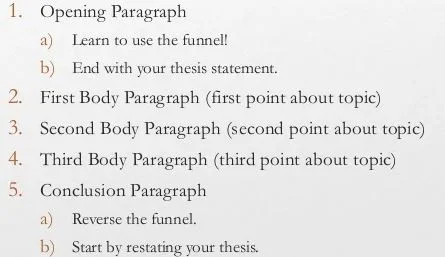
    The last sentence in the introduction is always the thesis statement. It reveals everything the paper is all about.

    writing introduction

    2. Body Paragraphs

    Arranging ideas and points in body paragraphs is a challenge for many students.

    Each paragraph should always cover a different point. If two paragraphs have to explain the same thing, make sure that the approach taken in both is different.

    To write a body paragraph, you will first start with a topic sentence to establish the main point of the paragraph. Reading the topic sentence in every body paragraph should provide the reader with the main points of your research.

    The next task is unpacking the topic sentence. This is where you explain and discuss the individual parts of the topic sentence. After that, you give evidence to support your data. This is done by providing arguments, data, facts, figures, and quotations from credible sources.

    Next, you will have to analyze the evidence. Never leave the evidence hanging. Instead, link it to the ideas you are trying to prove. Also, you will have to prove the objective by tying the body paragraph with the main topic of the research.

    Finally, provide a transition to link your body paragraph to the next. The connection should be clear to maintain the flow of the paper.

    3. Conclusion Paragraphs

    This is the paragraph where you wrap up your thoughts and ideas and leave the reader with an impression.

    The first thing to do when writing a conclusion is to remind the reader of your research problem. Paraphrase the research problem to make sure it is not identical to the one in the essay introduction.

    Next, you will have to sum up the paper. Summarize what you addressed in the body of the essay and provide the conclusions they lead to. Generally, you have to summarize your overall findings.

    After that, you discuss the implications. After formulating the summary of your findings, it is necessary to consider the implications of the broader research.

    This is by providing the takeaways from your paper which are either practical or theoretical. For example, you can provide a reasonable call for action or suggest a research topic that is not covered in your paper.

    How Many Paragraphs for Each of the Above Types?

    Introduction paragraph

    A research paper’s introduction paragraphs depend on the length of the paper. If you are writing a five-page page essay, then the introduction should not take more than half of a page.

    writing conclusion paragraph

    Therefore, one or two paragraphs are enough for such a paper. However, when writing a longer essay, the introduction paragraphs should be more in order to introduce everything you will talk about in the essay.

    There is always an approximation that the introduction should be 10 percent of the total word count.

    If you are writing an 1800-word research paper, then the introduction should be at least 180 words which translates to two introduction paragraphs.

    Body Paragraphs

    The shortest research paper usually has five paragraphs. Therefore, you are supposed to have three body paragraphs and one each for the introduction and conclusion.

    However, this varies depending on the length of the research paper. For example, an 1800-word research paper should at least have 16 body paragraphs.

    Conclusion

    Research papers should have one or two paragraphs that summarize everything that has been written in the paper. Making it too long may lead to repetition.

    However, for longer essays, more paragraphs can be required to summarize the key findings and their significance. One can also use the 10% rule. A conclusion with 10% of the total word count is proportional to the essay length.

    To add to that, professional empirical research articles usually have conclusions that range from five to six paragraphs.

     On the other hand, novice and student research papers usually have two to three conclusion paragraphs.

    How Long Should a Paragraph Be in a Research Paper?

    The introduction paragraph of an essay should at least have five or six sentences that build up to the thesis statement at the end.

    about topic sentence

    The first sentence should introduce the topic. The second should provide background information. The third should show the problem being addressed. The fourth should provide the objectives.

    Lastly, the fifth should provide the overview, and the thesis statement should come last.

    The body paragraphs of an essay should have six to seven sentences. These should contain sentences that introduce the main topic of the paragraph and unpack it.

    Further sentences should provide evidence of the topic. Additionally, other sentences should analyze the evidence and prove the objective of the research paper. The last sentence should be a link to the body paragraph of the next

    Lastly, the conclusion paragraphs should have five to six sentences. The average number of words should be between 75 to 85 words.

    These paragraphs should not only be long enough to summarise your research paper but also short enough to avoid repetition of what is already written in the paper.

    The sentences in the conclusion should be brief and straight to the point because there is nothing new that should be introduced. Every sentence should reflect the main idea of the essay.

  • Can Research Paper be written in First-Person Language or 3rd

    Can Research Paper be written in First-Person Language or 3rd

    Well, it is acceptable for one to write the research paper in the first person. However, you can use the first-person perspective in specific circumstances to articulate your points clearly.

    For instance, it may be part of the instructions for the author to write in the first person tone to state your personal experiences. Read on. 

    Can the Research Paper be Written in First-Person?

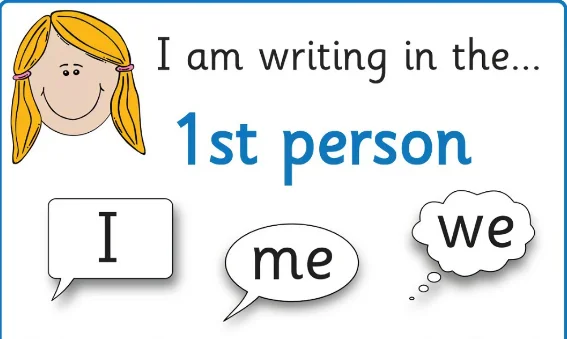
    If needed, a research paper can be written in the first-person language if the findings have to be presented by the researcher himself from an observation or ethnography point of view. In presenting observatory research, you can use the first person when discussing research methods and when referring to yourself as an author/researcher.

    writing in 1st person

    For example, in your methodology chapter, you might say, “I used snowball sampling” (first person). Then, in the results, you might have a subheading, “The responses from the snowball sample” (third person).

    In the discussion, you might have the heading “The findings are consistent with other research,” where you would cite papers in the third person.

    The research paper is the work of synthesis, assembly, and analysis of information from several sources to support your thesis.

    So, you can also use it in references to previous research if you use a narrative style. Here, you have to refer to the research findings of others. However, if you can find a way to fit it into your thesis, you can use the first person.

    However, first-paper language is discouraged in academic writing. Avoid using the first person if you are writing a formal academic paper. The general rule is that anything written for academia should sound as if a disinterested third party wrote it.

    Do not use the first person when writing a research paper. If you are doing a research paper, your goal should be to convey information clearly and concisely. Using the first person is too subjective and can make your argument sound weak; avoid including personal bias or opinion.

    Instances When to Write a Research Paper in First-Person

    First-person writing is personal and subjective, using “I” or “me.” Not only will it make your readers feel closer to you, but it will also make your writing more personal, allowing you to express your thoughts, opinions, and feelings.

    writing a research

    The following are a few instances in which it is appropriate to use the first person in an academic essay:

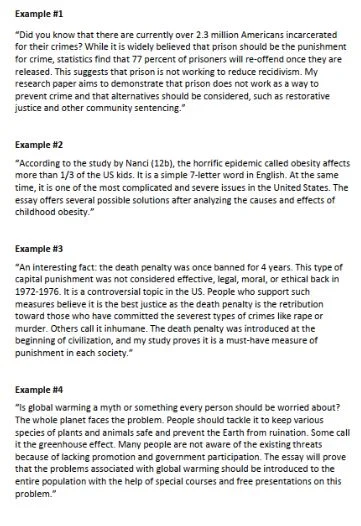
    Including a personal anecdote: You need a strong “hook” to draw your readers in during an introduction. Sometimes, the best hook is a personal anecdote or a short amusing story about yourself.

    Giving examples: Instead of providing general examples, you can use specific ones from your own experience. For example, instead of saying, “Some people have struggled with depression,” you might say, “I have suffered from depression for many years.”

    Stating your position concerning others: Sometimes, it is necessary to express your opinion on the topic, especially in an argumentative where you need to give evidence in the essay or cite sources. Readers want to know where you stand, and it is sometimes helpful to assert yourself by putting your own opinions into the essay. 

    For example, if you were to write on the topic of dog training, you may have a thesis statement such as “Dogs listen better to trainers who use positive rewards instead of scolding and hitting.” Your essay would then support this thesis with the reasons why harsher punishments do not work as well.

    Instances When Not to Write in the First Person

    1. When you are trying to Establish Objectivity

    If you think readers will be skeptical of your claims or arguments, then an appropriate voice might suggest you are objective and neutral.

    This will help convince them that you are not just expressing personal opinions. Examples of such writing include scientific papers and official reports.

    2. When you are trying to Give Directions

    You may use first-person pronouns in procedural texts) if they refer to the reader or general people but never to the one giving the directions.

    For example: “To turn on the computer, press the power button” sounds more professional than “I/We turn on the computer by pressing the power button.”

    3. When the whole point is that it is not about you

    ready to research

    In sales copy, if the product is supposed to be the star of the show, do not distract from it by telling people how great you are.

    If the reader never sees “I” or “we” in this kind of copy, they might fail to realize that a human being wrote it — and that can be a good thing.

    4. When you have no expertise to offer

    If you do not know what you are talking about, do not pretend as you do!

    If there are other sources of information out there that are more relevant on a given topic, then point the reader toward them instead of trying to pretend like you know it all yourself.

    5. When you want to give a complete view of something

    First-person writing gives only one perspective on a topic — yours. If you want to present all sides of an issue, it may be better to avoid the first person and use the third person instead.

    6. When you are giving definitions or instructions

    In this kind of writing, it is often better not to use the first person because the tone can sound too casual or personal like a friend telling another friend how to do something.

    In this situation, it is better to use the third person because it sounds more authoritative and informative.

    7. When you are making a claim that lacks universal agreement

    Using first-person makes your writing sound subjective and opinionated, so when you make claims that many people might dispute, it is better not to use “I” or “me.” 

    Can a Research Paper be Written in the Third Person? 

    All research papers and other pieces of academic writing should be written in the third-person language. For academic research, the third-person point of view is often more precise and allows a writer to come across as more credible. For example, in creative writing, it may appear less sincere.

    It is really up to your instructor or the publication you are submitting to. Some writers prefer writing in the first person because they want to connect with their audience. There are pros and cons either way.

    Importance of Third-Person Language in Academic Writing

    1. For Expressing General Idea 

    Third-person writing is most common in academic work, but it can also appear in professional or journalistic writing. It applies when a writer expresses a general idea coming from someone outside of the writer himself, usually an authoritative figure.

    Third-person writing is more practical in papers about history or science. 

    2. Promotes a Formal Tone 

    Third-person language provides a formal tone and more precise word choice. Using third-person language avoids sounding conversational and better reflects the tone of formal academic writing.

    Academic writing is a form of communication between the writer and the reader. It seems impersonal, objective, and factual. Third-person language can make your writing sound more assertive and confident when used correctly.

    3. Promotes Scholarly Voice and Eliminates Bias 

    A key concern when using a third-person voice in academic writing is maintaining an unbiased perspective. Bias often occurs when students write from their perspective rather than what they expect. 

    4. Makes the Author Remain Objective 

    The main reason for this difference is that academic writers need to be authoritative and objective by avoiding personal opinions and emotions. 

    Using third-person language in an academic setting gives readers the impression that an entire academic community supports your argument. Writing from the first-person point of view makes it too easy for readers to assume that everything you say is subjective and potentially biased. 

    Therefore, when you write in the third person, you are not simply summarizing information taken from another source; your readers will have confidence that you have conducted your research and analysis.

  • Supplemental Essays: How to write & Some Topics Example         

    Supplemental Essays: How to write & Some Topics Example         

    College application involves several steps. Most colleges will need a good resume, an application schedule, and a personal statement. However, for the admission board to gather more information about the applicant, a student has to write a supplemental essay.

    Writing a good supplemental essay is one of the best ways to polish your admission profile. 

    What is a Supplemental Essay?             

    Supplemental essays are part of your application for a chance to join a college. It is one of the mandatory requirements after the initial primary application.

    While there are colleges that will require a student to write several essays of different lengths, others can demand one long supplementary essay. 

    writing supplemental essay

    The essay prompts and the word count will vary depending on the rules and regulations of the college. Colleges have different admission committees that are in charge of giving out supplemental requirements for the essay.

    This is a way of getting the real picture of the applicant. Through these essays, the committee will tell if you are fit to be given a chance to join the college. 

    Even though the essays are called supplemental, it doesn’t mean they’re insignificant or optional. The essays act as supplements to make for any imbalances that occur in the primary application.

    Apart from the test scores, high school resume, and transcripts, colleges use these essays to get a true portrait of the applicant. 

    The personal statement you provide is simply an overview of your academic journey. On the other hand, supplemental essays give a broader scope and more details about the applicant.

    Your answers to the supplemental prompts will give the admission board more information about your identity, experiences, opinions, and background. 

    Since most of the essays range between 200-600 words, specificity is vital. You have to stick to the intention of the prompt and know the boundaries of answering it. Even so, let your answers to the questions be as direct as possible.

    This will make it possible to provide all the relevant answers and be able to stay within the word count. 

    Here is a guide on writing a college application essay.

    How to Write a Supplemental Essay

    Supplemental essays cover a lot and often allow you to explain yourself. You need to cover the extra-curricular activities, how the community has been of help in your life, and the reasons for choosing the college. The essays also explain the specific reason for selecting the course you want to pursue. 

    supplementary essay writing steps

    In many ways, supplemental essays are the perfect chance to compliment your personal statement.

    With proper planning, you can take a shorter time in writing the best supplemental essay that will boost your chances of getting admission. 

    When writing a supplemental essay, base it on the positive traits that you have included in other parts of your application.

    This is how you can come up with an essay that will make the reader understand more about you. 

    Also, it is important to answer the whole prompt so that you give as much information as possible. Therefore, focus on answering the specific prompts and have correct facts that will not contradict you. 

    Unlike other essays, supplemental essays are not a measure of a student’s creativity. They are just a way of providing more details about the student. This is the reason why a direct approach is the best way of writing these essays.

    The ideal way to start the essay is by providing the answer to the prompt in the early stages of your writing. 

    Through the use of anecdotes, explain to the reader the answers you are providing. Including details from your personal experience is a good way of demonstrating facts for the readers to understand better.

    Far from that, more emphasis should be on the initiative, growth, and impact. With these themes, it will be easier to come up with an attractive supplemental essay. 

    Below are additional tips to help you write your supplemental essay:

    1. Picking the right topics

    While some colleges give specific topics, others still give students the chance to select from the options provided. Therefore, picking the perfect topic will make it easier to write a piece that will entice the audience.

    Ensure that you write intending to prove to the admission board that you will succeed in your studies and career. If you choose great topics, the chances of developing a good supplemental essay will be high. 

    2. Answering the question

    seeking college admission

    Many admission boards will be keen to determine your ability to understand questions. As such, it is advisable to read and understand the supplemental essay prompt before you can start writing.

    Understating the prompt allows you to write only facts that are relevant to the essay. 

    It will also be difficult to reuse an essay you previously wrote for another college.

    This proves difficult because most of the supplemental questions are specific to an individual institution. Therefore, take time and understand the question if you want to write a successful essay. 

    3. Have an outline

    Even though you may have your writing process, creating an outline can make your writing easier. Start by brainstorming your personal qualities so that you know the right ideas that you can include in your outline.

    Think of experiences that you can convey in your supplemental essay to make it more informative and attractive. With a proper outline, you will take a shorter time to come up with a well-organized essay. 

    4. Avoid Repetition

    Remember to have all the details you included in your main essay. With all that in mind, do not repeat them in the supplemental essay. Simply focus on giving the admission committee more information about yourself and why you deserve a place in the school. 

    5. Narrowing Down your Focus 

    When you are choosing a topic, opt for one that is not too big. This is a common mistake that most students make. Since the word count for a supplemental essay is not big, select a topic that you can comfortably discuss in a few paragraphs.

    Being brief helps to discuss a complex topic in a short paragraph. It is better to write a small piece of essay and dot it well by making it informative. 

    6. Maintain your Voice

    As you write your essay, do not include too much unnecessary input that can make it boring. Even if you seek external help, do not be influenced to make changes that may be unnecessary.

    Seek opinions from teachers, friends, and parents but remember to maintain your voice in the essay. External help will be good for editing your work so that there are no grammar or sentence mistakes. However, ensure the voice in the writing is yours and avoid using informal words.

    7. Take Time to Understand the Essay Prompt

    Most essay prompts will ask the student to explain why he or she wants to join this particular college. If that is not the case, other prompts will be about the interests of the student in the particular program.

    Therefore, stick to the prompt and avoid unnecessary explanations that will make you go off-topic. For instance, if you are asked about a school program, do not emphasize writing about the learning institution as a whole. 

    8. Write about Yourself

    write about yourself

    Supplemental essays are all about presenting information about the applicant. These essays allow you to tell the admission board why you are the best fit to be in their institution.

    Even if the topic at hand is about the school, ensure you include something constructive and encouraging about yourself.

    At the same time, reveal something new about yourself. There have to be different facts about yourself that you did not include in the application. 

    9. Do your Homework

    Do thorough research about the programs and courses of the school. If the school wants an explanation of why you want to join them, use programs that you have an interest in to catch their attention. However, let all the explanations you give be in line with your goals and interests. 

    Do a lot of homework to know more about the college. Researching before you write the essay will help you to know what the admission board of the college expects from applicants. 

    10. Stay Within the Word Count

    Many colleges give specific word counts for supplemental essays. As such, you are expected to write within the count. You have to write and meet the minimum word count that the admission board requires.

    Not staying within the word count will be an indication of a lack of seriousness and an inability to follow instructions. 

    Examples Of Supplemental Essay Topics

    1. Why us? Tell us the reasons why you want admission into our university.

    2. What are the main reasons why you have an interest in the majors you have selected?

    3. Describe your specific areas of academic interest

    4. In brief and summary, elaborate on one of your favorite extra-curricular activities that you do for fun.

    Most of the supplemental essay prompts are similar. The essay you write is more technical and not a narrative style. Pack your essay with adequate personal information that shows why you are academically fit to be in that institution.